

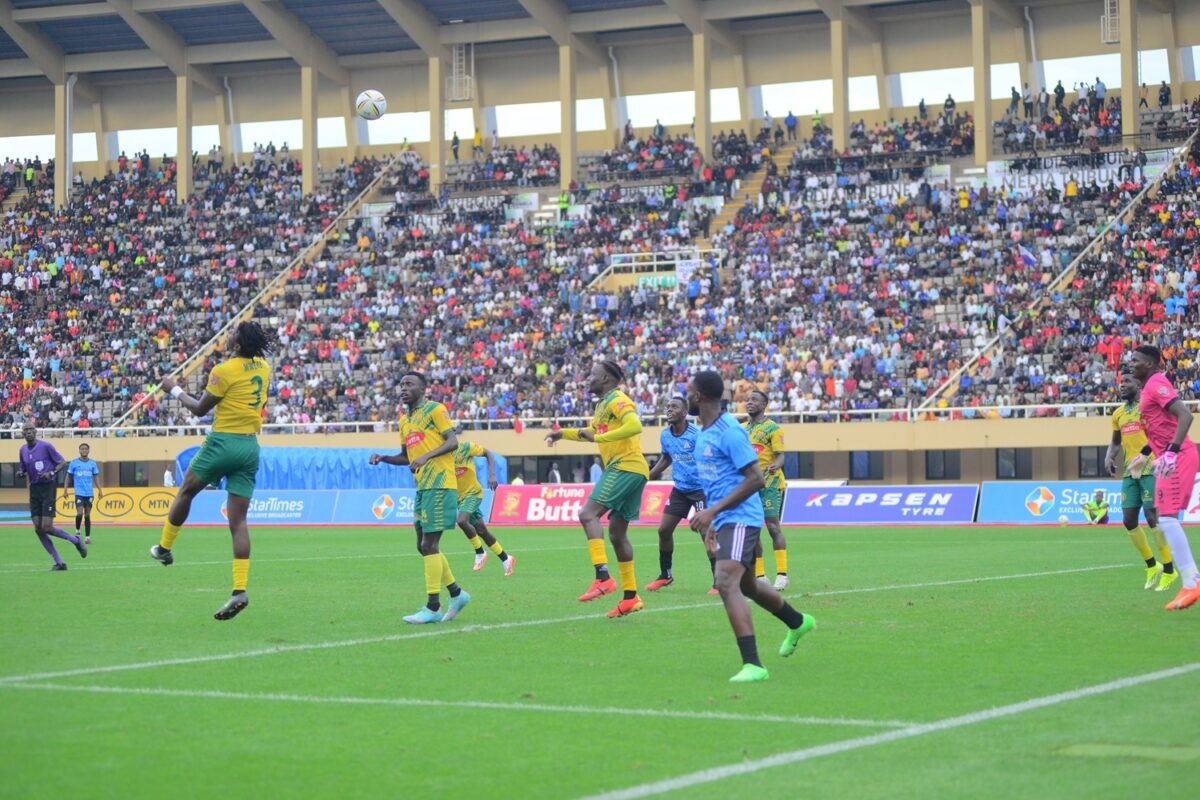
Liigi ya Uganda Premier League (UPL) eddiziddwa mu nkola ey’awaka n’ebweru

Mu kusalawo okw’amaanyi, Federation of Uganda Football Associations (FUFA) kati kikakasizza nti liigi ya Uganda Premier League (UPL) eddiziddwa mu nkola ey’awaka n’ebweru. Enkola eno ereeseewo okusoomoozebwa n’okukyuka kw’obuyinza mu bukulembeze bw’omuzannyo guno mu ggwanga.
Okusalawo kuno okusinga kwava ku kuziyizibwa okw’amaanyi okuva mu bantu abakulu. Ttiimu ezimanyiddwa ennyo nga Vipers SC, NEC FC, ne SC Villa zaavumirira enkola empya, nga ziraga okweraliikirira ku kuzannyisa emipiira mingi, obwenkanya, n’ebizibu by’ebyensimbi, nga Vipers yatuuka n’okutiisatiisa okwesamba. Abawagizi nabo baakola omulimu omukulu, nga balaga obutali bumativu bwabwe n’okutabulwatabulwa olw’enkola enzibu okutegeera nga bayita ku mikutu gya yintaneeti n’okwesamba. Okwongereza ku ekyo, abavujjirizi n’abasunsuzi, abakulu mu kufuna ssente mu[liigi, nabo baayongera ku puleesa nga beeraliikirira olw’ebizannyo ebitategeerekeka n’okulaba abantu abatono.
Wadde nga waliwo okuvumirira enkola ya FUFA eyasooka ey’okusalawo okuva waggulu, okukyusaamu kuno kulina ebirungi bingi. Kuddamu okuteekawo obutebenkevu era ne kwewala akavuyo, nga kisobozesa ttiimu[[1] okuteekateeka sizoni zaazo nga zimanyi bulungi. Okuvuganya kuddamu okukakasibwa nga buli mupiira gujja kuba gwa mugaso kyenkanyi. Ekisinga obukulu, okusalawo kuyamba okuzzaawo obwesige nga kulaga nti FUFA esobola okukola ku nsonga za ttiimu, abawagizi, n’abavujjirizi, ekikuuma obwesige bw’abavujjirizi era n’okuwa omukisa okuyiga eri enkyukakyuka ez’omu maaso.
Kino kiraga enkyukakyuka mu mupiira gwa Uganda. Kiraga nti FUFA tesobola kussaawo nkyukakyuka nga teyeebuuzizza ku balala era kati erina okukulembeza okukolera awamu, obwerufu, n’empuliziganya ennungi. Kiraabu ziraze nti[[1] zisobola okuwakanya enkola ezitataaganya ebigendererwa byazo, era abawagizi balaze ekifo kyabwe ng’abakwatibwako ab’omugaso. Sizoni ejja ejja kuba kugezesa kwa maanyi okulaba oba nga ddala omwoyo guno oguzziddwawo gujja kuleetawo abawagizi abangi mu bisaawe era n’okulaba oba nga FUFA esobola okusigala ng’ekolagana n’abalala.
FUFA Reverses UPL format amid backlash
In a significant decision, the Federation of Uganda Football Associations (FUFA) has officially reverted the Uganda Premier League (UPL) back to the traditional home-and-away format. This move abandons the controversial multi-phase split system introduced earlier and comes after mounting pressure from across Ugandan football. The reversal, while widely welcomed, sheds light on the challenges and evolving power dynamics within the sport’s governance in the country.
The decision was primarily driven by strong opposition from key stakeholders. Prominent clubs like Vipers SC, NEC FC, and SC Villa openly criticized the new format, raising concerns over fixture congestion, fairness, and financial implications, with Vipers even threatening a boycott. Fans also played a pivotal role, expressing their frustration and confusion over the complex structure through social media campaigns and potential boycotts. Furthermore, sponsors and broadcasters, crucial for league revenue, added to the pressure by worrying about unpredictable fixtures and lower viewership. Logistically, the new system also proved challenging to implement effectively.
Despite the criticism of FUFA’s initial top-down approach, the reversal carries several positive outcomes. It immediately restores stability and avoids potential chaos, allowing clubs to plan their seasons with familiarity. The competitive balance is reaffirmed as every match will count equally once again. Most importantly, the decision helps rebuild trust by demonstrating that FUFA can respond to the concerns of clubs, fans, and sponsors, thereby safeguarding partner confidence and providing a valuable learning opportunity for future reforms.
This episode reveals an evolving landscape in Ugandan football. It shows that FUFA can no longer impose major reforms unilaterally and must now prioritize collaboration, transparency, and consistent communication. Clubs have proven they can effectively challenge policies that threaten their interests, and fans have cemented their role as influential stakeholders. The coming season will be a true test of whether this restored goodwill translates into higher stadium attendance and if FUFA can maintain this more consultative approach. By reversing its decision, FUFA has set a powerful precedent that the collective voice of the football community now holds tangible influence over the league’s future.


